
Picture this: a customer picks up their phone, dials your business number, and… nothing happens the way it should. Maybe it rings and rings with nobody answering. Maybe it goes to the wrong department. Maybe they get a busy tone and just give up and call your competitor instead.
That customer doesn’t call back to complain. They just quietly go somewhere else. And you never even know you lost them.
This happens more often than most business owners realize — and it’s usually not because the team isn’t trying hard enough. It’s because the phone system behind the scenes simply isn’t built to handle the way a real, growing business works.
Let’s walk through this the simple way: what a “proper” phone system (called a PBX, short for Private Branch Exchange) actually does, and the warning signs that tell you it’s time to upgrade.
What Is a PBX, Really?
Think of a PBX like the reception desk of a big office building. When someone walks in, the receptionist doesn’t just point randomly and hope for the best. They know exactly who works where, who’s available right now, who’s on lunch, and how to route the visitor to the right person quickly.
A PBX does the same thing for your phone calls. It’s the “smart receptionist” sitting behind every call that comes into your business, deciding where that call should go, what happens if nobody answers, and how your team can manage all of this without chaos.
Without a proper PBX, your business is basically running a busy office with no receptionist at all — everyone is just hoping calls land in the right place.
The Warning Signs You’re Losing Calls (and Customers)
Here are the signals that show up again and again in businesses that have outgrown their current setup, or never had a proper system to begin with.
1. Calls Ring Forever with No Backup Plan If a call rings and rings with no answer, and there’s no automatic backup — like forwarding to another available person — that customer just hangs up. A proper PBX can automatically try the next available person, or the next department, so a call is never left stranded.
2. No Way to Know How Many Calls You’re Actually Missing Many businesses have no visibility at all into missed calls. They don’t know if it’s 5 missed calls a day or 50. A real PBX system tracks this automatically, so you can actually see the size of the problem instead of guessing.
3. Everyone Uses Personal Mobile Numbers When employees give out their personal numbers to customers, the business loses control. If that employee leaves the company, they can take that customer relationship — and every future call — with them.
4. One Phone Line, Many People Fighting Over It If your team is still sharing one or two phone lines, only one conversation can happen at a time. Every other caller either waits or gives up.
5. No Call Routing Based on Department or Time A customer calling about sales shouldn’t land on the desk of someone in accounts. And a call at 9 PM shouldn’t ring an empty office all night. A proper PBX routes calls based on department, time of day, and availability — automatically.
6. Remote or Field Staff Are Cut Off from the Office Line If your sales team is out meeting clients, or your support staff works from home, but they can’t make or receive calls using the business number, you’ve got a communication gap. Customers end up calling a number that nobody picks up.
7. No Call Recording for Training or Disputes When there’s a disagreement about what was promised on a call, and there’s no recording, it becomes one person’s word against another’s. This creates unnecessary friction with both customers and staff.
8. Growth Means Adding Chaos, Not Capacity Every time the business hires more people or opens a new branch, phone communication becomes more tangled instead of smoother. That’s a clear sign the current setup was never designed to grow with you.
If even two or three of these sound familiar, it’s a strong signal that calls — and the customers behind them — are slipping through the cracks.
What a Proper PBX System Looks Like Instead
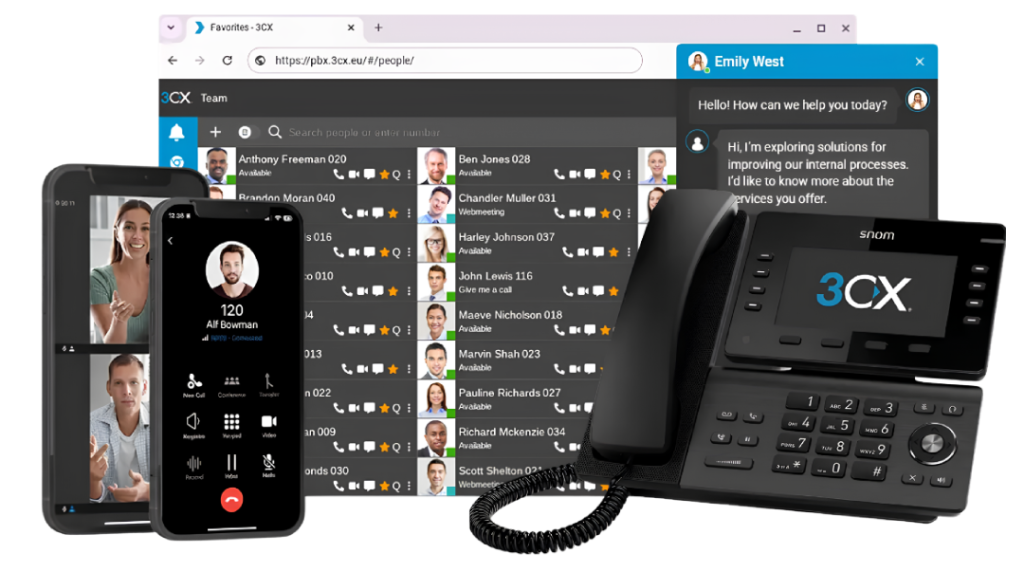
A well-set-up PBX, like 3CX, quietly fixes every one of the problems above:
- Smart call routing, so calls go to the right department or person automatically, based on rules you set once.
- Automatic backup answering, so if one person doesn’t pick up, the call moves to the next available person instead of disappearing.
- Full visibility, with reports showing exactly how many calls came in, how many were missed, and how long customers waited.
- One business number for everyone, including remote and field staff, using mobile and web apps — so no call depends on a single employee’s personal phone.
- Call recording built in, useful for training new staff and resolving disputes fairly.
- Room to grow, since the system is designed to scale from 25 employees to hundreds without turning into a tangled mess.
Why This Matters More Than It Seems
A missed call feels small in the moment. But multiply it across a month, a quarter, a year — and it adds up to real revenue that quietly walked out the door, along with customers who assumed you simply didn’t care enough to answer.
The businesses that grow steadily are usually the ones that make it effortless for a customer to reach them, every single time. That’s not an accident — it’s the result of having the right system working quietly in the background.
The Takeaway
If your business phone calls feel more like guesswork than a managed process, it’s worth taking a closer look before it costs you more customers than you realize. A proper PBX system doesn’t just answer the phone — it protects every conversation your business depends on to grow.
As Pakistan’s first 3CX Silver Partner, Ace Management helps businesses replace guesswork with a phone system that’s actually built to handle real growth — smart routing, full visibility, and support for remote teams, all included. If you’re not sure how many calls your business might be losing right now, a quick, free consultation can help you find out.